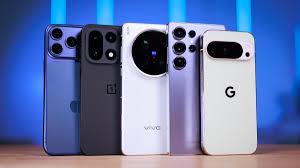
Are you struggling to pick your next smartphone? With so many options, it’s easy to feel lost. You scroll through endless ads and confusing specs, wishing for a clear guide. Finding a reliable source for honest opinions can make all the difference. This post will help you discover the best mobile phone review site. You will learn what makes a review trustworthy. This will help you make smart choices and save time.
Key Takeaways
- Identify trustworthy sources for phone reviews.
- Understand the key factors to look for in a phone.
- Learn how to interpret technical specifications.
- Recognize common marketing tricks to avoid.
- Find sites that offer hands-on testing and comparisons.
- Make informed decisions for your next smartphone purchase.
What Makes a Great Mobile Phone Review Site
Choosing where to get your smartphone information is important. A good review site helps you understand phones better. It breaks down complex features into simple terms. This way, you can easily compare different models. You can see which phone fits your needs and budget. A great site also looks at how phones perform in real life. This goes beyond just listing specs.
Expert Testing and Hands-On Experience
The best review sites have people who actually use the phones. They test cameras in different light. They check how long the battery lasts with normal use. They also see how fast apps open and if the phone gets hot. This real-world testing gives you a true picture. It tells you what it’s like to own the phone.
This hands-on approach is different from just reading a spec sheet. A spec sheet might say a phone has a great camera. But a reviewer can tell you if the photos look good or if the colors are natural.
They can describe the feel of the phone in your hand. They can tell you if the screen is bright enough outdoors.
- Detailed camera tests showing sample photos in various conditions.
- Battery life tests that reflect typical daily usage patterns.
- Performance benchmarks and real-world app loading times.
- Durability and build quality assessments based on physical handling.
- Software experience and user interface observations.
When a reviewer spends a week with a device, they notice things you wouldn’t from a quick look. They see how the software behaves over time. They find out if it’s easy to use for everyday tasks.
This level of detail helps you avoid surprises after you buy.
Unbiased Opinions and Transparency
It’s crucial that a review site is not influenced by phone companies. Some sites might get paid to say nice things. The best mobile phone review site will be upfront about any sponsored content. They should clearly state if they received a phone for free. Their main goal should be to help consumers.
Look for sites that point out both the good and the bad. No phone is perfect. A balanced review will highlight areas where a phone could be better.
This honesty builds trust. It shows the reviewer is on your side, not the manufacturer’s.
- Clear disclosure of any partnerships or sponsored reviews.
- A commitment to honest feedback, including criticisms.
- Independent testing methodologies that are consistently applied.
- A history of providing objective comparisons between devices.
- Editorial independence from advertisers and manufacturers.
When you read a review, check if the reviewer seems to be pushing a specific model. If they only praise one phone and bash all others, be cautious. A truly objective review will present a fair assessment of each device.
Comprehensive Comparison Tools
The ability to compare phones side-by-side is a big help. The best mobile phone review site offers tools for this. You can pick two or more phones and see their features listed next to each other. This makes it easy to spot the differences.
| Feature | Phone A | Phone B | Phone C |
|---|---|---|---|
| Display Size | 6.5 inches | 6.7 inches | 6.1 inches |
| Camera Resolution | 50MP | 108MP | 12MP |
| Battery Capacity | 4500 mAh | 5000 mAh | 4000 mAh |
| Processor | Snapdragon 8 Gen 1 | A15 Bionic | Snapdragon 778G |
These comparison tables are quick ways to see key specs. They help you understand trade-offs. For example, one phone might have a larger screen but a smaller battery.
Another might have a better camera but a slightly slower processor.
Understanding Technical Specifications
Review sites should explain what technical terms mean. You might see “RAM” or “GHz.” These numbers matter, but what do they tell you? A good site will explain that more RAM means the phone can handle more apps at once. A faster GHz processor means the phone runs more smoothly.
For instance, when a review mentions “IP rating,” it refers to water and dust resistance. An IP68 rating means a phone can survive submersion in water for a certain period. Knowing this helps you choose a phone that fits your lifestyle.
If you are often around water, this is a key spec to consider.
- Explanation of common terms like RAM, processor speed, and display resolution.
- Details on camera sensors, aperture, and image processing.
- Information on battery technology and charging speeds (wired and wireless).
- Clarification of connectivity standards like 5G bands and Wi-Fi versions.
- Explanation of storage options and expandable memory (microSD card support).
Sites that offer glossaries or explain terms within the review itself are very helpful. They empower you to make informed decisions based on actual performance and capability, not just buzzwords.
Top Features to Evaluate
When you are looking at phones, certain features stand out. They impact your daily experience the most. A good review site will focus on these key areas. They help you decide what matters most to you.
Camera Quality
For many people, the phone’s camera is very important. Reviewers should show sample photos and videos. They look at how well the camera performs in different lighting. Low light performance is often a big challenge for phone cameras.
A good review will compare the main camera, ultrawide, and telephoto lenses. They might also discuss features like optical zoom versus digital zoom. Optical zoom keeps image quality high, while digital zoom often reduces it.
You will want to see how the camera handles portraits, landscapes, and close-up shots.
- Daylight photo quality and color accuracy.
- Low-light photography capabilities and noise reduction.
- Video recording resolution, frame rates, and stabilization.
- Performance of different camera lenses (main, ultrawide, telephoto).
- Special camera features like portrait mode, night mode, and macro shots.
Some sites even use charts to rate camera performance. This gives you a quick visual summary of how each phone’s camera stacks up. For example, a statistic from a tech publication showed that in a recent survey, 49% of smartphone users cited camera quality as a top reason for their purchase.
Battery Life and Charging
Nobody wants a phone that dies halfway through the day. Reviewers test how long a phone’s battery lasts. They often use specific tests to measure this. This includes how long it takes to stream videos or browse the web.
They also look at charging speeds. Fast charging can be a lifesaver. Some phones can charge up to 50% in just 30 minutes.
Wireless charging is another feature many people appreciate. It offers convenience by eliminating the need for cables.
- Screen-on time under various usage scenarios.
- Time taken to fully charge the battery using wired and wireless methods.
- Comparison of battery capacity (mAh) with real-world endurance.
- Assessment of battery health features and software optimizations.
- Efficiency of power-saving modes.
Consider your own usage habits. If you are a heavy user, you will need a phone with excellent battery life. If you are near a charger often, a slightly smaller battery might be acceptable.
Display Performance
The screen is what you look at all the time. Review sites test brightness, color accuracy, and refresh rates. A bright screen is essential for outdoor use. Good color accuracy makes photos and videos look vibrant. A high refresh rate (like 120Hz) makes scrolling and animations look very smooth.
They might also discuss display technology, like OLED versus LCD. OLED screens generally offer deeper blacks and better contrast. LCD screens can sometimes be more affordable.
Understanding these differences helps you pick a display you will enjoy looking at.
- Peak brightness levels for outdoor visibility.
- Color accuracy and gamut coverage (e.g., sRGB, DCI-P3).
- Refresh rate capabilities (60Hz, 90Hz, 120Hz) and its impact on smoothness.
- Display resolution and sharpness (e.g., Full HD+, Quad HD+).
- Screen durability features like Gorilla Glass.
A stat from a consumer electronics report indicated that display quality is one of the top three most important features for smartphone buyers. This highlights the significance of this component.
Performance and Speed
How fast does the phone operate? Reviewers check app loading times. They see how well the phone handles demanding games. They also note if the phone gets warm during heavy use. This tells you about the processor and cooling system.
Performance is not just about raw speed. It’s also about how smooth the user interface is. A well-optimized software experience makes a phone feel faster, even with average hardware.
Reviewers will often comment on this.
- App launch times and multitasking capabilities.
- Gaming performance with graphics-intensive titles.
- Overall system responsiveness and UI smoothness.
- Processor benchmarks and thermal throttling.
- RAM management and its impact on performance.
If you are a gamer or use many apps simultaneously, performance will be a top priority. A good review will give you a clear idea of what to expect.
Avoiding Marketing Traps
Phone companies use clever marketing to make their products sound better. The best mobile phone review site will help you see through these tactics. They offer honest assessments of what a phone can really do.
Over-Hyped Features
Sometimes a feature gets a lot of attention. But in practice, it might not be that useful. For example, a phone might boast about a new type of zoom. But if the image quality is poor, it’s not worth the hype. Reviewers should provide real-world examples to show if a feature is truly beneficial.
Be wary of claims that seem too good to be true. For instance, a phone advertised as having “all-day battery life” might only achieve that with very light usage. A good review will define what “all-day” means in practical terms.
- Analysis of advertised features versus actual performance.
- Identification of gimmicky features that lack practical use.
- Scrutiny of marketing claims regarding battery, camera, and performance.
- Comparison of advertised specs with real-world results.
- Detection of subjective marketing language that exaggerates benefits.
A trustworthy review will present data and user experiences to back up its claims, not just repeat marketing slogans.
Understanding Specs vs. Reality
Specs can be misleading. A phone might have a high megapixel count on its camera. But if the sensor is small or the software is poor, the photos might not be great. Similarly, a large RAM number doesn’t always mean better performance if the software isn’t optimized.
The best mobile phone review site explains how specs translate into user experience. They show you actual photos or demonstrate app performance. This helps you understand the real-world impact of those numbers.
- How megapixel counts relate to actual photo detail.
- The role of software optimization alongside hardware specs.
- Real-world battery life versus advertised capacity (mAh).
- How screen resolution impacts perceived sharpness and battery drain.
- Processor performance in practical, everyday tasks.
A consistent finding in user surveys is that real-world performance is more valued than raw specifications. This underscores why reputable review sites are so important.
Where to Find Reliable Reviews
There are many places to read phone reviews. Some are better than others. Finding the best mobile phone review site requires knowing what to look for. Look for sites with a track record of honesty.
Established Tech Publications
Major tech websites have teams of experienced reviewers. They have been testing devices for years. They often have strict testing protocols. These sites usually offer in-depth articles, videos, and comparison tools.
They tend to be more independent because they rely on traffic and ad revenue, not direct payments from manufacturers. Their reputation depends on providing accurate information to their readers.
- Websites with a long history of tech journalism.
- Publications that employ dedicated teams of product testers.
- Sites that offer both written reviews and video content.
- Those that have clear editorial policies and disclosure statements.
- Platforms that engage with their audience through comments and forums.
A quick search for “smartphone reviews” will bring up many of these. Look for familiar names in the technology news space.
YouTube Reviewers and Channels
Many skilled reviewers use YouTube to showcase phones. Video reviews can be very helpful. You can see the phone in action. You can hear the reviewer’s opinions directly.
Just like websites, some YouTubers are more reliable than others. Look for channels that are transparent about sponsorships. Check if they perform detailed tests and offer balanced opinions.
A channel that consistently produces high-quality, unbiased content is a great resource.
- Channels that provide detailed unboxing and first impressions.
- Reviewers who conduct in-depth camera and battery tests.
- Video content that demonstrates phone performance and user interface.
- Channels that disclose affiliate links or sponsorships clearly.
- Reviewers with a consistent, objective tone.
Watching a few different reviewers for the same phone can give you a well-rounded perspective. This helps ensure you’re not relying on just one person’s opinion.
Common Myths Debunked
Myth 1: All “flagship” phones are the same
This is not true. While flagship phones represent the best a brand offers, they have distinct differences. One might excel in camera performance, while another prioritizes battery life or raw processing power.
Reviewers highlight these unique strengths and weaknesses.
Myth 2: More megapixels always means a better camera
Megapixels are just one aspect of camera quality. Sensor size, lens aperture, and image processing software play a much larger role. A phone with fewer megapixels but a larger sensor and better software can often take superior photos, especially in low light.
Myth 3: A high refresh rate display is only for gamers
While gamers benefit greatly from high refresh rates (like 120Hz), they also improve the general user experience for everyone. Scrolling through websites, social media feeds, and app menus appears smoother and more fluid, making the phone feel more responsive and pleasant to use.
Myth 4: You need the most expensive phone to get good battery life
Many mid-range and even some budget phones offer excellent battery life. This is often due to efficient processors and software optimizations, not just large battery capacities. Some expensive phones have power-hungry features that can drain the battery faster.
Frequently Asked Questions
Question: How often should I look for new phone reviews
Answer: New smartphone models are released frequently, often every few months. It is a good idea to check for reviews when you are actively looking to buy a new phone, or if you are curious about the latest advancements.
Question: Are budget phone reviews as important as flagship reviews
Answer: Yes, budget phone reviews are very important. They help people find good value for money without overspending. Many budget phones offer impressive features that can rival more expensive models.
Question: Can I trust reviews from a site that accepts free phones
Answer: You can trust them if the site is transparent about sponsorships and maintains editorial independence. Look for sites that clearly state they received the phone for review purposes and still provide balanced feedback, noting both pros and cons.
Question: What is the difference between a review and a spec sheet
Answer: A spec sheet lists technical details like screen size and processor speed. A review provides an analysis of how those specifications perform in real-world use, along with subjective opinions on user experience.
Question: How do I know if a reviewer is biased
Answer: Look for consistent patterns. If a reviewer always praises one brand and criticizes others without clear reasons, or if their opinions seem to change based on whether a phone is sponsored, it might indicate bias.
Conclusion
Finding the best mobile phone review site guides your purchasing decisions. Look for honest, in-depth testing and transparent opinions. Understand the key features like camera, battery, and display. Be aware of marketing tactics. Use resources like established tech publications and reliable YouTube channels. This helps you choose the right phone confidently.