Ever wondered if a phone could look and feel as unique as it performs? The Nothing Phone 1 aimed to do just that, stepping into a crowded market with a design that truly stands out. If you’re curious about its transparent back, the unique Glyph Interface, and how it holds up against competitors, you’re in the right place. This post breaks down everything you need to know about the nothing phone 1 review and features, helping you decide if its distinctive style matches your needs.
Key Takeaways
- The Nothing Phone 1 features a unique transparent design and the innovative Glyph Interface.
- It offers solid mid-range performance suitable for everyday tasks and moderate gaming.
- The display is vibrant and smooth, providing an excellent viewing experience.
- Camera capabilities are decent for the price point, particularly in good lighting.
- Battery life is generally reliable for a full day of use.
- The software experience is clean and close to stock Android with subtle Nothing additions.
Nothing Phone 1 Design and Build Quality
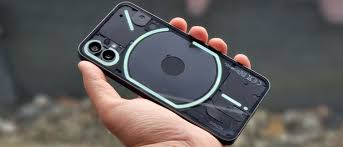
The most striking aspect of the Nothing Phone 1 is its design. It boldly embraces a transparent aesthetic, revealing many of the phone’s internal components. This isn’t just for show; it’s a deliberate choice that sets it apart from virtually every other smartphone on the market. The back panel is made of Gorilla Glass 5, offering durability and a premium feel.
This transparent design extends to the exposed screws and internal elements, giving the device a unique, almost steampunk-inspired look. It feels substantial in hand, with a well-balanced weight distribution. The frame is made of recycled aluminum, adding to its eco-friendly credentials and providing a sturdy structure.
The attention to detail is evident. Even components that are typically hidden are integrated in a way that looks intentional and clean. This design philosophy makes the phone a conversation starter and a piece of functional art.
The Glyph Interface
The defining feature of the Nothing Phone 1’s design is undoubtedly the Glyph Interface. This is a series of LED light strips embedded on the back of the phone. These lights are not just for aesthetics; they serve a practical purpose.
They can be configured to provide visual notifications for calls, messages, and app alerts. Different patterns and light sequences can be assigned to specific contacts or notification types, allowing users to understand what’s happening without even looking at the screen. This is especially useful when the phone is placed face down.
The Glyph Interface also integrates with Google Assistant, showing light patterns when the assistant is listening or processing a request. It can even act as a fill light for the camera, providing a soft, diffused light source for photos and videos taken with the rear cameras. This innovative use of LEDs adds a unique layer of functionality and personalization.
Materials and Durability
The Nothing Phone 1 uses Gorilla Glass 5 for both the front and back panels, which is a strong material designed to resist scratches and minor drops. The aluminum frame adds structural integrity. While it’s not IP-rated for water and dust resistance, which is common for devices in this price segment, the build quality feels solid enough for everyday use.
The choice of materials contributes to the phone’s premium feel. The smooth finish of the glass back, combined with the matte texture of the aluminum frame, creates a pleasant tactile experience.
- Transparent Back Panel: Reveals internal components for a unique aesthetic.
- Gorilla Glass 5: Used on front and back for scratch resistance and durability.
- Recycled Aluminum Frame: Provides a sturdy and eco-conscious build.
- Glyph Interface: Customizable LED light strips for notifications and utility.
- Balanced Weight Distribution: Feels comfortable and secure in hand.
Nothing Phone 1 Display and Visuals
The display on the Nothing Phone 1 is a significant highlight, offering a premium visual experience that punches above its weight class. It features a 6.55-inch OLED panel, which is known for its vibrant colors, deep blacks, and excellent contrast ratios. This means that images and videos look crisp and lively, and reading text is comfortable.
The display also boasts a 120Hz adaptive refresh rate. This technology dynamically adjusts the refresh rate based on the content being displayed, conserving battery life when a high refresh rate isn’t needed and providing ultra-smooth scrolling and animations when it is. This makes everyday interactions feel much more fluid and responsive.
Colors are generally accurate, with good calibration out of the box. Brightness levels are also sufficient for outdoor use, although direct sunlight can still be a challenge for any smartphone display. The screen is HDR10+ certified, enhancing the viewing experience for supported content with a wider range of colors and better dynamic range.
OLED Technology Explained
OLED, which stands for Organic Light-Emitting Diode, is a display technology where each pixel emits its own light. Unlike LCD screens that rely on a backlight, OLED pixels can be individually turned on or off. This capability is what allows for true blacks, as pixels can be completely deactivated, resulting in infinite contrast ratios.
This self-emissive nature also leads to faster response times, contributing to the smooth motion seen with the 120Hz refresh rate. It can also enable more power efficiency, particularly when displaying dark content. However, OLED panels can sometimes be more susceptible to burn-in if static images are displayed for extended periods, though this has become less of an issue with modern OLED technology and software optimizations.
120Hz Adaptive Refresh Rate
A 120Hz refresh rate means the display updates its image 120 times per second. This is double the standard 60Hz, resulting in noticeably smoother motion. Whether you’re scrolling through social media feeds, playing games, or watching videos, everything appears more fluid and less jerky.
The “adaptive” aspect is key. Instead of running at 120Hz constantly, which would drain the battery quickly, the display intelligently adjusts the rate. For static content, it might drop to 60Hz or even lower. When you’re actively interacting with the screen, like scrolling, it ramps up to 120Hz. This balance between smoothness and power efficiency is a significant advantage.
Display Specifications and Performance
The Nothing Phone 1’s display is a crucial part of its user experience. Its high refresh rate, vibrant OLED panel, and good brightness levels combine to create an enjoyable viewing experience for all types of content. It’s a key feature that makes using the phone a pleasure.
- Screen Size: 6.55 inches
- Display Type: OLED
- Resolution: Full HD+ (1080 x 2400 pixels)
- Refresh Rate: 120Hz adaptive
- Peak Brightness: Approximately 500 nits (typical), 1200 nits (peak HDR)
- Color Support: HDR10+
Nothing Phone 1 Performance and Hardware
The Nothing Phone 1 is powered by the Qualcomm Snapdragon 778G+ 5G chipset. This is a capable mid-range processor that strikes a good balance between performance, power efficiency, and cost. It’s designed to handle everyday tasks with ease and can also manage moderate gaming sessions without significant lag.
This chipset uses an octa-core CPU configuration and an Adreno 642L GPU, which is competent for graphics processing. For most users, this means apps will open quickly, multitasking will be smooth, and general phone usage will feel responsive. It’s not a flagship-level processor, but it’s more than enough for the vast majority of smartphone users.
The phone is available in different RAM and storage configurations, typically 8GB of RAM with 128GB or 256GB of storage, and sometimes a 12GB RAM variant. Having ample RAM is important for smooth multitasking, allowing you to keep more apps open in the background without them needing to reload when you switch back to them. The storage options are also generous enough for most users’ needs.
Snapdragon 778G+ 5G Explained
The Snapdragon 778G+ is a System-on-Chip (SoC) designed by Qualcomm for upper mid-range smartphones. It integrates the CPU, GPU, modem, and other essential components onto a single chip. The “G+” designation usually indicates a slight performance boost over the standard 778G.
It’s built on a 6nm process technology, which contributes to its power efficiency. The CPU typically consists of one high-performance Kryo 670 Prime core, three performance Kryo 670 Gold cores, and four efficiency Kryo 670 Silver cores. The Adreno 642L GPU handles graphics processing. The integrated Snapdragon X53 5G modem ensures fast connectivity.
RAM and Storage Options
RAM (Random Access Memory) is like the phone’s short-term memory. More RAM allows the phone to hold more data and applications in active memory, leading to faster switching between apps and better overall multitasking performance. The Nothing Phone 1 offers configurations that are sufficient for smooth operation.
Storage is where your apps, photos, videos, and files are kept permanently. The available options of 128GB and 256GB are generous. For most users, 128GB is plenty, but if you take a lot of photos and videos or download many large apps and games, 256GB provides more breathing room.
Real-World Performance Examples
During daily use, the Nothing Phone 1 handles common tasks with grace. Opening social media apps like Instagram and Twitter is nearly instantaneous. Browsing the web, even with many tabs open, remains fluid. Watching streaming services like Netflix and YouTube offers a smooth, enjoyable experience thanks to the display and processor working in tandem.
For gaming, titles like Call of Duty Mobile or Genshin Impact can be played on medium settings with acceptable frame rates. You might experience occasional frame drops in graphically intensive moments or on the highest settings, but for casual to moderate gaming, the performance is quite satisfactory for its class.
- Processor: Qualcomm Snapdragon 778G+ 5G
- RAM Options: 8GB, 12GB
- Storage Options: 128GB, 256GB
- 5G Connectivity: Yes
- Daily Task Performance: Smooth and responsive for browsing, social media, and streaming.
- Gaming Performance: Capable of running most mobile games at medium settings.
Nothing Phone 1 Camera System
The Nothing Phone 1 features a dual-camera setup on the rear, consisting of a 50MP main sensor and a 50MP ultrawide sensor. This is a good combination for a mid-range device, offering versatility for different shooting scenarios. The 50MP main sensor is the workhorse, designed to capture detailed and vibrant photos.
The ultrawide lens allows you to fit more into your shots, which is great for landscapes, group photos, or capturing architecture. While it might not offer the same level of detail as the main sensor, it’s a valuable addition for creative photography. The front-facing camera is a 16MP sensor, suitable for selfies and video calls.
The camera app is straightforward, offering modes like Photo, Portrait, Night, and Pro. The software processing aims for a natural look, avoiding overly saturated colors or aggressive sharpening, which many users will appreciate.
Main Camera Sensor (50MP)
The primary camera uses a Sony IMX766 sensor, which is a popular choice in many mid-range and even some flagship phones for its good performance. With its 50MP resolution, it captures a lot of detail, especially in good lighting conditions. The sensor uses pixel binning technology, meaning it combines multiple pixels into one larger pixel.
This process helps to improve light sensitivity and reduce noise, resulting in better image quality, particularly in low light. When you take a photo, it might be processed to output a 12.5MP image, but this is done to enhance detail and reduce noise. The main sensor also features optical image stabilization (OIS), which helps to keep shots steady and reduces blur from hand shake.
Ultrawide Camera Sensor (50MP)
The secondary 50MP camera serves as the ultrawide lens. It has a wider field of view, allowing you to capture a broader scene. This is useful when you’re in a tight space and need to get more of the subject or background in the frame.
While ultrawide cameras often come with compromises, the 50MP sensor on the Nothing Phone 1 aims to provide decent quality. Photos taken with the ultrawide lens can sometimes exhibit a slight distortion at the edges, but this is typical for such lenses. It also has a fixed focus, meaning it’s optimized for capturing scenes at a distance.
Camera Performance in Different Conditions
In daylight, the Nothing Phone 1’s main camera performs commendably. Photos are sharp, with good color reproduction and dynamic range. The AI scene detection can help optimize settings for various environments.
The ultrawide camera also produces good results in bright light, offering a significantly wider perspective. Portrait mode is generally effective, with decent edge detection for creating a natural-looking bokeh effect.
Low-light performance is where mid-range phones often show their limitations. While the Nothing Phone 1’s main sensor, with OIS and pixel binning, can capture usable shots in dim conditions, noise can become more apparent, and details might be softer compared to higher-end devices. The dedicated Night mode can help by taking longer exposures and processing the image to bring out more light and detail, but results can vary.
Sample Scenario: Capturing a Cityscape at Dusk
Imagine you are on a rooftop overlooking a city as the sun sets. You want to capture the illuminated buildings and the colorful sky. Using the main 50MP camera, you’d aim for clear shots of the buildings. The ultrawide lens would be perfect for including the vast expanse of the sky and the spread of the city below. The camera’s HDR capabilities would help balance the bright lights of the city with the fading natural light in the sky, preventing blown-out highlights and crushed shadows.
- Main Rear Camera: 50MP, f/1.88, OIS, PDAF
- Ultrawide Rear Camera: 50MP, f/2.2, 114° field of view
- Front Camera: 16MP, f/2.45
- Daylight Photography: Sharp images with good colors and detail.
- Ultrawide Capability: Useful for capturing expansive scenes.
- Low-Light Photography: Decent but can exhibit noise.
- Night Mode: Available to improve low-light shots.
Nothing Phone 1 Battery Life and Charging
The Nothing Phone 1 is equipped with a 4500 mAh battery. This is a respectable capacity for a modern smartphone, and when combined with the efficient Snapdragon 778G+ processor and the adaptive 120Hz display, it provides a solid day of usage for most users.
Typical daily use, which might include browsing the web, checking emails, using social media, watching some videos, and making calls, should comfortably last from morning to night. Heavy users, such as those who play games for extended periods or use GPS navigation extensively, might find themselves needing to top up before the end of the day.
Charging is handled via USB-C. The phone supports 33W wired fast charging, which can take the battery from 0 to 50% in around 30 minutes. It also supports 15W wireless charging, a feature not always found in this price segment, adding a layer of convenience. Reverse wireless charging is also supported, allowing you to charge other Qi-compatible devices, like earbuds, by placing them on the back of the phone.
Understanding mAh Battery Capacity
mAh stands for milliampere-hour. It is a unit of electric charge and is commonly used to measure the capacity of batteries. A higher mAh rating generally means a battery can hold more charge and last longer on a single full charge. A 4500 mAh battery is considered mid-to-high capacity for a smartphone.
The actual battery life is influenced by many factors beyond just the mAh rating. This includes the processor’s efficiency, the display’s brightness and refresh rate, the number of apps running in the background, network signal strength, and how the phone is used.
Wired Charging Speeds
Wired charging is typically the fastest way to charge a smartphone. The 33W wired fast charging on the Nothing Phone 1 means that when you connect it to a compatible charger, it can deliver power quickly. This is crucial for when you’re in a rush and need to get a significant charge in a short amount of time.
A 33W charger can replenish a substantial portion of the 4500 mAh battery within 30 minutes. This makes it convenient for quick top-ups during breaks or before heading out. It’s important to use a charger that supports the correct wattage for optimal charging speeds.
Wireless Charging Convenience
Wireless charging offers a cable-free charging experience. You simply place your phone on a compatible wireless charging pad. The Nothing Phone 1 supports 15W wireless charging, which is a good speed for wireless charging, though slower than its wired counterpart.
The inclusion of wireless charging, and especially reverse wireless charging, adds significant convenience. Being able to place your phone on a charging stand without plugging in cables is a small luxury. Reverse wireless charging means you can use your phone as a makeshift power bank for other devices, which can be incredibly useful in a pinch.
Sample Scenario: A Busy Traveler
Imagine you are traveling and your earbuds run out of battery. You have your Nothing Phone 1 with about 60% charge. You can simply place your earbuds on the back of your phone, and the reverse wireless charging will begin, giving your earbuds enough power to last. This feature eliminates the need to carry an extra power bank for small devices.
- Battery Capacity: 4500 mAh
- Wired Charging Support: 33W fast charging
- Wireless Charging Support: 15W wireless charging
- Reverse Wireless Charging: Yes
- Typical Daily Use Battery Life: Generally lasts a full day.
- Fast Charging Capability: Quick top-ups provide significant charge in about 30 minutes.
Nothing Phone 1 Software Experience
The Nothing Phone 1 runs on Nothing OS, which is built on top of Android. The philosophy behind Nothing OS is to offer a clean, fast, and bloatware-free experience, closely resembling stock Android but with subtle additions that align with Nothing’s unique design language.
The interface is minimalist and intuitive. It focuses on essential features and avoids unnecessary clutter. Icons have a distinct dot-matrix style, and widgets are designed to be functional and aesthetically pleasing. The overall look and feel are consistent with the phone’s hardware design, creating a cohesive user experience.
Updates are also a consideration. Nothing has committed to providing regular software updates, including security patches and feature enhancements, which is important for maintaining the phone’s performance and security over time.
What is Bloatware?
Bloatware refers to pre-installed software on a device that a user may not want or need. These can be manufacturer apps, third-party apps, or even carrier-specific applications. Bloatware can take up storage space, consume system resources, and sometimes display ads or notifications.
A clean software experience, like that offered by Nothing OS, means you get a device with minimal pre-installed unwanted applications. This allows you to customize your phone with only the apps you truly want and enjoy a snappier performance.
Nothing OS Features and Customization
Nothing OS emphasizes simplicity and fluidity. Key features include:
* Unique Dot-Matrix Icons: A signature visual element that gives the OS a distinct identity.
* Custom Widgets: Designed to be both functional and visually appealing, fitting the minimalist aesthetic.
* Glyph Interface Integration: Seamless control and customization of the phone’s LED lights directly from the OS.
* Fast and Smooth Performance: Optimized for the hardware to ensure a lag-free experience.
* Close to Stock Android: Users familiar with stock Android will find Nothing OS very intuitive.
The level of customization is focused on personalization rather than overwhelming options. You can set up the Glyph Interface to your liking, choose your preferred widgets, and arrange apps as you see fit.
Software Updates and Support
Nothing has pledged to provide three years of Android OS updates and four years of security updates for the Nothing Phone 1. This commitment is crucial for long-term user satisfaction and device longevity. It ensures that the phone receives the latest features and security patches, protecting it from vulnerabilities.
This update policy is competitive, especially for a device in its price segment. It shows that Nothing is invested in supporting its products and providing a reliable user experience.
- Operating System: Nothing OS (based on Android)
- User Interface: Minimalist, clean, and intuitive.
- Bloatware: Very minimal, close to stock Android.
- Key Visual Elements: Dot-matrix icons, custom widgets.
- Glyph Interface Control: Integrated within the OS.
- Software Update Policy: 3 years of OS updates, 4 years of security updates.
Common Myths Debunked
Myth 1: The transparent design is just for looks and serves no practical purpose.
Reality: While the transparent design is visually striking and unique, the Glyph Interface, which is a key part of this design, offers practical functionality. These LED lights provide customizable visual notifications for calls, messages, and apps, allowing users to stay informed without constantly checking their screen. They also serve as a fill light for photography and indicate when Google Assistant is active.
Myth 2: The Snapdragon 778G+ is too weak for modern smartphones.
Reality: The Snapdragon 778G+ is a highly capable mid-range chipset. It offers excellent performance for everyday tasks like browsing, social media, and streaming. It can also handle most mobile games smoothly on medium to high settings, providing a fluid gaming experience.
It strikes a good balance between performance and power efficiency, making it a solid choice for this segment.
Myth 3: The camera quality is poor because it’s not a flagship phone.
Reality: The Nothing Phone 1 features a dual 50MP camera system with a capable main sensor (Sony IMX766) and an ultrawide lens. In good lighting conditions, it captures sharp, detailed photos with good colors. While it may not match the absolute best camera phones, it offers competitive and satisfying results for its price point, especially for casual photography and social media use.
Myth 4: Wireless charging is too slow to be useful.
Reality: The Nothing Phone 1 supports 15W wireless charging. While this is slower than its 33W wired charging, it offers significant convenience. It’s ideal for overnight charging or placing the phone on a charging pad during work.
The inclusion of reverse wireless charging further enhances its utility by allowing it to charge other devices.
Frequently Asked Questions
Question: What makes the Nothing Phone 1’s design stand out?
Answer: Its most distinctive feature is the transparent back panel, which reveals the internal components and is complemented by the unique Glyph Interface, a system of customizable LED light strips.
Question: Is the Nothing Phone 1 good for gaming?
Answer: Yes, it is capable of handling most mobile games on medium to high settings thanks to its Snapdragon 778G+ processor and 120Hz display, offering a smooth gaming experience.
Question: How good is the camera on the Nothing Phone 1?
Answer: It features a capable dual 50MP rear camera system that performs well in good lighting conditions, capturing detailed photos. The ultrawide lens adds versatility.
Question: What is the battery life like on the Nothing Phone 1?
Answer: With its 4500 mAh battery and efficient hardware, it generally provides a full day of typical usage for most users.
Question: Does the Nothing Phone 1 support 5G?
Answer: Yes, the Snapdragon 778G+ 5G chipset ensures that the phone supports 5G connectivity.
Conclusion
The Nothing Phone 1 offers a truly unique package with its distinctive transparent design and the innovative Glyph Interface. Its display is vibrant and smooth, the performance is solid for everyday tasks and moderate gaming, and the cameras deliver good results, especially in daylight. Battery life is dependable for a full day’s use, and the clean Nothing OS provides a pleasant, bloatware-free software experience. If you seek a smartphone that breaks the mold and offers a refreshing take on design and user interaction, the Nothing Phone 1 is a compelling choice.